This site is intended for US Healthcare Professionals

Efficacy

XERMELO is a tryptophan hydroxylase inhibitor indicated for the treatment of carcinoid syndrome diarrhea in combination with somatostatin analog (SSA) therapy in adults inadequately controlled by SSA therapy.

XERMELO + SSA resulted in sustained bowel movement (BM) reductions over time1

TELESTAR was a 12-week, double-blind, placebo-controlled clinical trial in patients with metastatic neuroendocrine tumors (NETs) and CSD. Patients reported between 4 to 12 BMs daily, despite the use of SSA therapy at a stable dose for at least 3 months.1

Patients were randomly assigned to receive telotristat ethyl 250 mg three times per day + SSA or SSA + placebo (PBO) three times per day.1

In TELESTAR, XERMELO + SSA delivered superior reductions in average daily BM frequency vs SSA + PBO over 12 weeks (primary endpoint; P<0.001).1

Sustained BM reductions continued over 12 weeks

Hr Line

Study chart showing sustained BM reductions over 12 weeks with XERMELO + SSA versus SSA + Placebo
Purple downwards arrow with 2X in the middle

GREATER REDUCTION

IN AVERAGE DAILY BM FREQUENCY VS SSA + PBO: -1.4 VS -0.6 (P<0.001), RESPECTIVELY1

  • Allow XERMELO 12 weeks to work, although some patients will see a response within 3 weeks1
  • Average daily use of rescue short-acting SSA injections with XERMELO + SSA vs SSA + PBO was 0.3 vs 0.7, respectively1

XERMELO + SSA reduced serotonin as measured by u5-HIAA1,2

At Week 12, u5-HIAA levels decreased with XERMELO + SSA but increased with SSA + PBO (secondary endpoint; P<0.001).1,2

Study chart showing 43% reduction in u5-HIAA levels with XERMELO + SSA at week 12 compared to a 14% increase with SSA + PBO

u5-HIAA=urinary 5-hydroxyindoleacetic acid.

There were no significant differences between treatment groups for secondary endpoints of flushing and abdominal pain.2

Durable response with XERMELO + SSA was evaluated2

Secondary endpoint: Durable response defined as ≥30% reduction in BM frequency compared to baseline for ≥50% of the double-blind study period.2

Study chart evaluating 44% response rate with XERMELO + SSA is 2 times greater than SSA + PBO at 20%

There were no significant differences between treatment groups for secondary endpoints of flushing and abdominal pain.2

XERMELO mechanism of action

See how XERMELO and SSAs work together to address the underlying CSD pathology.1,3

Illustration of a NET Cell with XERMELO and SSA blocking excess serotonin

Why is a 12-week trial of XERMELO so important?

To help set evidence-based expectations, explain that it may take up to 12 weeks to see average weekly reductions in BM frequency; however, some patients may see improvement in 3 weeks.1

Icon of calendar reading 12 weeks

In a prespecified, exploratory analysis, investigators evaluated the time it took patients to consistently respond to treatment (sustained response). The time to achieve a sustained response was measured from the first dose of the treatment period until the first day of two consecutive weeks that patients experienced a ≥30% reduction in BM frequency.4

The percentage of patients who met this definition of sustained response increased from 4 weeks to 12 weeks.4

Study chart showing XERMELO + SSA sustained response increased from 55% at week 4, to 65% at week 8, to 75% at week 12, compared to SSA + PBO which increased from 28% at week 4, to 50% at week 8, to 55% at week 12

75%

Experienced Sustained Reduction IN BM Frequency4


Patients taking XERMELO reported satisfaction levels in an online survey after 6 months of treatment5

Observational analyses are NOT intended for direct comparison with clinical trials and may introduce bias. Real-world evidence can complement data from randomized controlled trials.

In this prospective, observational, open-label, real-world study, patients reported their satisfaction with CSD symptoms via online surveys conducted at baseline and every 6 months up to a maximum of 3 years. 223 patients completed the baseline survey, and 125 patients (56%) completed the 6-month follow-up survey.5

6-month results among patients taking XERMELO included: somewhat to very satisfied (78%), neither satisfied nor dissatisfied (10%), somewhat dissatisfied (9%), and very dissatisfied (4%). The survey results may exhibit a bias, given that only those patients who remained on XERMELO for a duration of 6 months qualified for inclusion in the analysis.5
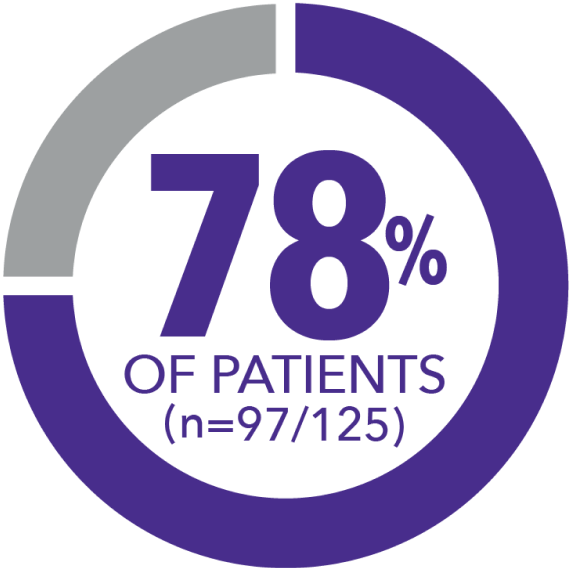
Purple and grey circle with 78% of patients n=97/125 in the middle

RELAX REGISTRY TRIAL5


Felt "somewhat" to "very satisfied" with control of their CSD symptoms after 6 months of telotristat ethyl treatment


Clinical guidelines recommend XERMELO for patients with uncontrolled CSD6

NANETS logo

North American Neuroendocrine Tumor Society (NANETS) guidelines recommend telotristat ethyl (XERMELO) as the appropriate drug of choice, in combination with SSA, for patients with stable radiographic disease and refractory carcinoid syndrome characterized by suboptimal control of diarrhea. Under these circumstances, XERMELO was considered a more appropriate choice than an increase in SSA dose, use of short-acting octreotide, or use of nonspecific antidiarrheal or antitumor therapy.

In situations where there is uncontrolled diarrhea toward the end of the month/4 weeks/dosing cycle, other recommendations may apply.


Icon of shield with a check mark in the middle

Safety

Hr line

XERMELO was well tolerated in most patients.1

Icon of 2 hands palms out holding a heart.

Patient access and support

Hr line

Ways to help patients with CSD on their treatment journey.

Icon of toilet paper roll

About CSD

Hr line

Find questions about refractory CSD symptoms to ask your patients already on SSA therapy.

References:

  1. XERMELO® (telotristat ethyl). Prescribing Information. TerSera Therapeutics LLC.
  2. Kulke MH, Hörsch D, Caplin ME, et al. Telotristat ethyl, a tryptophan hydroxylase inhibitor for the treatment of carcinoid syndrome. J Clin Oncol. 2017;35(1):14-23.
  3. Molina-Cerrillo J, Alonso-Gordoa T, Martínez-Sáez O, Grande E. Inhibition of peripheral synthesis of serotonin as a new target in neuroendocrine tumors. Oncologist. 2016;21(6):701-707.
  4. Dillon JS, Kulke MH, Hörsch D, et al. Time to sustained improvement in bowel movement frequency with telotristat ethyl: analyses of phase III studies in carcinoid syndrome. J Gastrointest Cancer. 2021;52(1):212-221.
  5. Li D, Darden C, Osman N, et al. Real-world clinical and patient-reported outcomes from the longitudinal telotristat ethyl treatment registry of patients with neuroendocrine tumors. Cancer Manag Res. 2022;14:3009-3020.
  6. Strosberg JR, Halfdanarson TR, Bellizzi AM, et al. The North American Neuroendocrine Tumor Society consensus guidelines for surveillance and medical management of midgut neuroendocrine tumors. Pancreas. 2017;46(6):707-714.

Important Safety Information and Indication

  • Contraindications: XERMELO is contraindicated in patients with a history of a hypersensitivity reaction to telotristat. Reactions have included angioedema, rash and pruritis.
  • Warnings and Precautions: XERMELO may cause constipation, which can be serious. Serious complications of constipation have been reported during clinical trials and post marketing with individual reports of intestinal perforation, obstruction, and fecaloma. Monitor for signs and symptoms of constipation and/or severe, persistent, or worsening abdominal pain in patients taking XERMELO. Discontinue XERMELO if severe constipation or severe, persistent, or worsening abdominal pain develops.
  • Contraindications: XERMELO is contraindicated in patients with a history of a hypersensitivity reaction to telotristat. Reactions have included angioedema, rash and pruritis.
  • Warnings and Precautions: XERMELO may cause constipation, which can be serious. Serious complications of constipation have been reported during clinical trials and post marketing with individual reports of intestinal perforation, obstruction, and fecaloma. Monitor for signs and symptoms of constipation and/or severe, persistent, or worsening abdominal pain in patients taking XERMELO. Discontinue XERMELO if severe constipation or severe, persistent, or worsening abdominal pain develops.
  • Adverse Reactions: In a clinical trial of patients with carcinoid syndrome diarrhea and 4-12 bowel movements per day, the most common adverse reactions (≥5%) include nausea, headache, increased gamma-glutamyl transferase, depression, flatulence, decreased appetite, peripheral edema, and pyrexia. In a second clinical trial of patients with carcinoid syndrome diarrhea and less than 4 bowel movements per day, additional adverse reactions of abdominal pain and constipation were reported in ≥5% of patients.
  • Drug Interactions: If necessary, consider increasing the dose of concomitant CYP3A4 and CYP2B6 substrates, as XERMELO may decrease their systemic exposure. If combination treatment with XERMELO and short-acting octreotide is needed, administer short-acting octreotide at least 30 minutes after administering XERMELO.
  • Use in Special Populations: XERMELO is not recommended in patients with moderate and severe hepatic impairment.

Indication

XERMELO is a tryptophan hydroxylase inhibitor indicated for the treatment of carcinoid syndrome diarrhea in combination with somatostatin analog (SSA) therapy in adults inadequately controlled by SSA therapy.

To report suspected adverse reactions, contact the FDA at 1-800-FDA-1088 or www.FDA.gov/medwatch. You may also contact TerSera Therapeutics at 1-844-334-4035 or medicalinformation@tersera.com.

Please see accompanying Full Prescribing Information.


Important Safety Information and Indication

  • Contraindications: XERMELO is contraindicated in patients with a history of a hypersensitivity reaction to telotristat. Reactions have included angioedema, rash and pruritis.
  • Warnings and Precautions: XERMELO may cause constipation, which can be serious. Serious complications of constipation have been reported during clinical trials and post marketing with individual reports of intestinal perforation, obstruction, and fecaloma. Monitor for signs and symptoms of constipation and/or severe, persistent, or worsening abdominal pain in patients taking XERMELO. Discontinue XERMELO if severe constipation or severe, persistent, or worsening abdominal pain develops.
  • Contraindications: XERMELO is contraindicated in patients with a history of a hypersensitivity reaction to telotristat. Reactions have included angioedema, rash and pruritis.
  • Warnings and Precautions: XERMELO may cause constipation, which can be serious. Serious complications of constipation have been reported during clinical trials and post marketing with individual reports of intestinal perforation, obstruction, and fecaloma. Monitor for signs and symptoms of constipation and/or severe, persistent, or worsening abdominal pain in patients taking XERMELO. Discontinue XERMELO if severe constipation or severe, persistent, or worsening abdominal pain develops.
  • Adverse Reactions: In a clinical trial of patients with carcinoid syndrome diarrhea and 4-12 bowel movements per day, the most common adverse reactions (≥5%) include nausea, headache, increased gamma-glutamyl transferase, depression, flatulence, decreased appetite, peripheral edema, and pyrexia. In a second clinical trial of patients with carcinoid syndrome diarrhea and less than 4 bowel movements per day, additional adverse reactions of abdominal pain and constipation were reported in ≥5% of patients.
  • Drug Interactions: If necessary, consider increasing the dose of concomitant CYP3A4 and CYP2B6 substrates, as XERMELO may decrease their systemic exposure. If combination treatment with XERMELO and short-acting octreotide is needed, administer short-acting octreotide at least 30 minutes after administering XERMELO.
  • Use in Special Populations: XERMELO is not recommended in patients with moderate and severe hepatic impairment.

Indication

XERMELO is a tryptophan hydroxylase inhibitor indicated for the treatment of carcinoid syndrome diarrhea in combination with somatostatin analog (SSA) therapy in adults inadequately controlled by SSA therapy.

To report suspected adverse reactions, contact the FDA at 1-800-FDA-1088 or www.FDA.gov/medwatch. You may also contact TerSera Therapeutics at 1-844-334-4035 or medicalinformation@tersera.com.

Please see accompanying Full Prescribing Information.

Attention

If you click “Continue” below, you will leave the current site. TerSera is not responsible for the privacy policy of any third-party websites. We encourage you to read the privacy policy of every website you visit.

Continue
Cancel

Healthcare Professionals

The information contained in this section of the site is intended for US Healthcare Professionals only. Click Continue if you are a US Healthcare Professional.

Continue
Cancel

Healthcare Professionals

The information contained in this section of the site is intended for US Healthcare Professionals only. Click Continue if you are a US Healthcare Professional.

Cancel

NPI lookup

To find your NPI number, please fill out the information below.

Fields marked with an asterisk (*) are required.

Enter your first name.
Enter your last name.
Select your state.

Search results

Select the entry with your name and address information.  

Name NPI number State ZIP Code  

No results found

Refine your search and try again.